
Marcus Reclaimed

The bus doors hissed shut right as Marcus turned the corner. He stood, taking in the sound – like the city exhaling disgust at him specifically.
His briefcase swung against his knee. The leather handle was already sticky with sweat even though fog was choking the street like wet gauze. The 38 Geary pulled away, its taillights two red eyes winking at his failure.
“Wait!”
His voice disappeared.
Marcus stood there. 8:47. Daniel from accounting would purse his lips into that small anus of disapproval he saved for people who couldn’t even catch a bus on time. Twelve minutes until the next one, standing here like an idiot in shoes that cost three hundred dollars and still squeaked when he walked.
Fuck it.
He started jogging. The briefcase banged his thigh. His girlfriend had bought him these shoes, saying they’d help. As if Italian leather could make white people see past his skin. The bus sat fat and smug at the next light.
Marcus ran.
Something weird happened. His breathing evened out and the briefcase stopped mattering. He was actually gaining on it. The bus lurched forward and so did Marcus, tie flying back like he was someone important, someone with somewhere to be. Someone who mattered.
He caught up to it at Fillmore.
Inside, the usual suspects slumped against windows: Purple Scarf Lady, Giants Cap Grandpa. All of them marinating in their own quiet desperation, scrolling past other people’s fake lives while their real one leaked away minute by minute. The bus was an aquarium. They were the fish.
Marcus laughed – an ugly bark that came from his stomach.
He looked at that bus and something snapped clean. The light changed green and the bus wheezed forward, but Marcus was already past thinking about catching it.
“Come on, you piece of shit!”
He careened down the sidewalk, dodging poles and benches. A mother yanked her stroller away from him at the last minute as he strode by at full speed. Yeah, lady. Black guy running and yelling. Call someone.
The bus fell back like it was standing still.
Marcus’s legs pumped harder. The neighborhood morphed around him. Victorian houses that used to pulse with life – musicians in the basement, somebody’s tía cooking on the stoop, kids doing homework on the porch – now they were hollow, Airbnbs and investment properties. Empty most of the year. Fresh battleship-gray paint over what used to be electric blue, canary yellow, deep purple. The owners probably lived in Atherton. Probably had never met their neighbors.
His corner store was gone. In its place was a shop selling candles that cost more than his monthly PG&E bill, waxy columns named “Meditation” and “Renewal.” As if the scent of burning eucalyptus could fill the hole where your soul used to be.
The mural on the laundromat – this gorgeous thing, all these Black and brown faces looking hopeful – painted over. Just flat beige now. The landlord probably thought it hurt property values.
He tore past the construction site, another glass phallus climbing toward heaven. The jackhammers sounded like the city screaming. The billboard promised luxury. This used to be Mrs. Chen’s garden. She grew actual food here. She fed people. Taught kids that tomatoes came from dirt, not Whole Foods. Before long, a developer decided the land was worth more empty.
Marcus’s lungs burned but the burn felt clean, like cauterizing a wound.
Downtown swallowed him. The financial district pressed in – all those buildings designed to look important, to make you feel small. Each one blocking more sky, like they wanted to own even the light. Marcus recalled coming here with his father. He was maybe eight. They got ice cream at the Ferry Building, watched ships and the men working near the water’s edge. Men who did real things with their hands. Before the algorithms made his father redundant.
His dad drank himself dead by 56.
Marcus ran faster.
The morning rush thickened. All these people in their costumes, clutching phones like they were afraid someone might ask them to look up, to actually see. Streaming into buildings where they’d spend the day moving money around, creating nothing, producing nothing, just shuffling numbers in a shell game where the house always wins. He dodged through them. His jacket flapped open. His briefcase swung wild. Some guy in a blue suit yelled “Watch it!” but Marcus was already gone.
There – his building. Fifty hours a week minimum. Analyzing market trends for people who already had more money than their great-grandchildren could spend. Writing reports no one read. Sitting in meetings about meetings. His life was measured in Excel cells and Outlook invites and the slow erosion of whatever he used to believe about himself.
The fountain in the plaza shot water in computer-programmed arcs. Even the water had to perform here. Had to fall exactly where it was told.
Marcus’s heart crashed against his ribs, over and over. His shirt clung to him, a wet membrane. His feet throbbed, hot and raw inside his expensive shoes. Other employees filtered through the revolving doors – those doors that keep spinning whether you go in or not, whether you exist or not. Security guards with their metal detectors and their dead eyes, and everyone sleepwalking through security theater toward their climate-controlled coffins.
He should stop, breathe, become presentable. Should walk through those doors and apologize and pretend today was like every other day, would be followed by another day exactly the same, a string of identical days leading to a retirement party where people would say nice things they didn’t mean before forgetting his name by Monday.
His legs kept pumping.
The fountain got close. He could smell the chlorine trying to mask the mineral rot underneath. His briefcase felt like it was full of stones. Like he was carrying his own death around. Like a casket, with his dissolved dreams inside he’d toted blindly for years.
Twenty feet. Ten.
The security guard looked up. Started to smile. He started to lift his hand in a wave, this small acknowledgment that Marcus was a person he recognized, a regular, someone who belonged here.
Marcus cut hard left.
He launched himself over the fountain’s wall. Hung suspended in the air for one impossible second – between the him that clocked in and the him that could still choose. The water waited below, moving the only way it remembered how before someone told it to stop.
He crashed through the surface.
The cold was a slap. Perfect. It filled his nose, his ears, his mouth. It soaked through everything – his suit, his shirt, his skin. His briefcase hit the bottom with a sound like a body falling. Above, muffled shouting. People gathering to watch the show. He stayed under, letting the water hold him. Letting it wash off whatever he’d been pretending to be.
When he surfaced, he was laughing and choking, and maybe crying. He couldn’t tell. It didn’t matter. He stood there in knee-deep fountain water, clothes plastered to him, and looked at the crowd. Karen from HR. His boss Tom. The security guard speaking urgently into his radio like Marcus was a bomb threat.
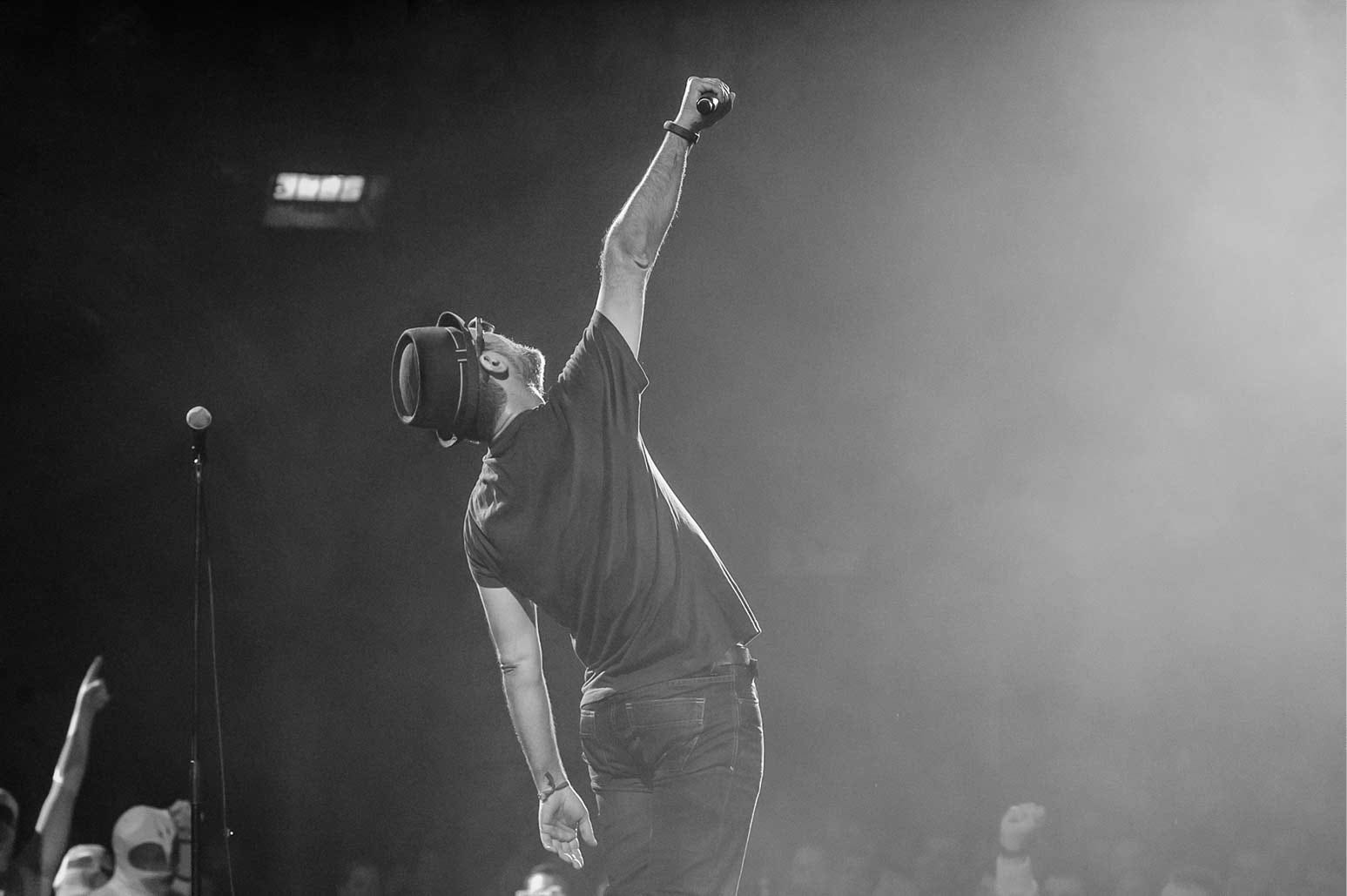
He reached down and grabbed his briefcase. Lifted it overhead like a trophy. Water geysered from every seam.
“I QUIT!” he screamed at all of them, at the buildings, at the manicured trees in their concrete prisons, at the whole neutered gutted sold-off corpse of the city. “I FUCKING QUIT!”
And standing there in the fountain – water everywhere, everyone staring, sirens probably coming – Marcus felt his pulse for the first time in years. He felt the ghost of the city that used to exist under all this glass and greed. His father’s hand in his. Mrs. Chen’s garden in full bloom. Every mural, every mom-and-pop shop, every person and place erased to make room for more money. But also, this: his own lungs taking in air. His own feet on the ground. His own life, whatever was left of it, finally his again.
Water streamed off him onto the concrete, finding its own way back. The way water does when you stop telling it what to be.
R.E. Harris is a writer, journalist and documentary filmmaker currently living in metro Atlanta. His work has been featured in The New York Times, The Los Angeles Times, The Washington Post, among other international publications. He is a past recipient of the George Polk Award, the Scripps Howard Award and the Grantham Prize for investigative journalism. He surrounds himself with pens, puzzles and inquiry.
 | A guest post by
|
Really exciting writing. I loved this!
I just moved from SF so this really hit home. Or rather, ex-home.
“The fountain in the plaza shot water in computer-programmed arcs. Even the water had to perform here. Had to fall exactly where it was told.”